20130324

First work of the year


Over the past few weeks, I've started to get out into the garden and get some work done.

The first thing I had to do was repair the greenhouse so I could get some seedlings started. The plastic covering did not hold up to the weather over the winter and had split and come open in multiple places. I repaired it with packing tape and am planning on working out a more permanent fix before next winter.


It doesn't zip up as well as it used to, but I can close off the top shelf and that seems to be enough to keep it warm. In the flat, I've planted tomato, tomatillo, eggplant, cumin, spinach and three kinds of chilli pepper. So far, only the spinach has sprouted.

The next job was to get my peas and potatoes planted. I turned this bed in the fall, but various weeds and grasses had taken over, forcing me to hoe it up again. The peas are planted in two rows on either side of the twine trellis running along the length of the bed. The potatoes are in the near area that's been worked. This is my first time trying potatoes.


This past week, I've moved on to planting some herbs and greens. My plan is to work 1/4 of my original garden area every two weeks, so I'll have a staggered harvest. When it warms up, I'll plant the purira peppers, the tomatillos, the eggplant and the cumin into whatever spaces I can find. The spinach will have to go out sooner and the tomatoes and other chillies will go into the garden on the other side of the house.


Over the past week, I've turned this area several times. Yesterday, I worked a good amount of compost into it and got a small bed of carrots planted in the upper left-hand corner. Today, I laid in a short row each of red onion, chinese cabbage, spinach, orach, cilantro, and calendula. Since it was raining, I'm not sure how successful this planting was. The seeds clumped up on me and were hard to spread right. Also, the clay soil didn't allow me to cover them like I would've preferred. When it dries up, I'll make sure the onion sets are covered properly. As for the seeds, I'll just have to wait and see. When the ground's dry later this week, I'll plant more of the same crops, continuing down the left hand side of the garden. In the circle, I'm planning on mixing dill and nigella.

I'm really enjoying the rosemary flowers and will try and postpone cutting it back as long as possible:


20130321

A Picture A Week

So, I've decided to take weekly pictures of my garden again this year.  This time, I'm taking them from the other side. Instead of leaning out the window, I'm shooting from the top of my tall step-ladder.

I know it's March, but let's call this one Week Zero:
3/17/2013 - No work done yet (well, you can see part of the bed I've turned to the left). That's bok choy flowering to the right, and some parsley and garlic near it that over-wintered. The rosemary is blooming nicely, too.

3/24/2013 - Spent some time this week turning about 1/4 of the garden and mixing in plenty of compost. Yesterday, I planted a small bed of carrots in the upper left-hand corner. Today I tried planting some seeds in the rain: bok choy, cilantro, calendula, orach, spinach, and onion sets. I'll plant in the rest of this area after it dries out later this week.


4/7/2013 - I skipped last week, but not a lot of change in that time.  I weeded the borage volunteers and finished planting the section to the left. Bok choy, arugula and orach are all starting to come up. Also, the onion bulbs are starting to sprout.


4/14/2013 - I got another 1/4 of this garden planted with herbs and greens and pruned the rosemary a bit.


20130320

Searching for Volunteers

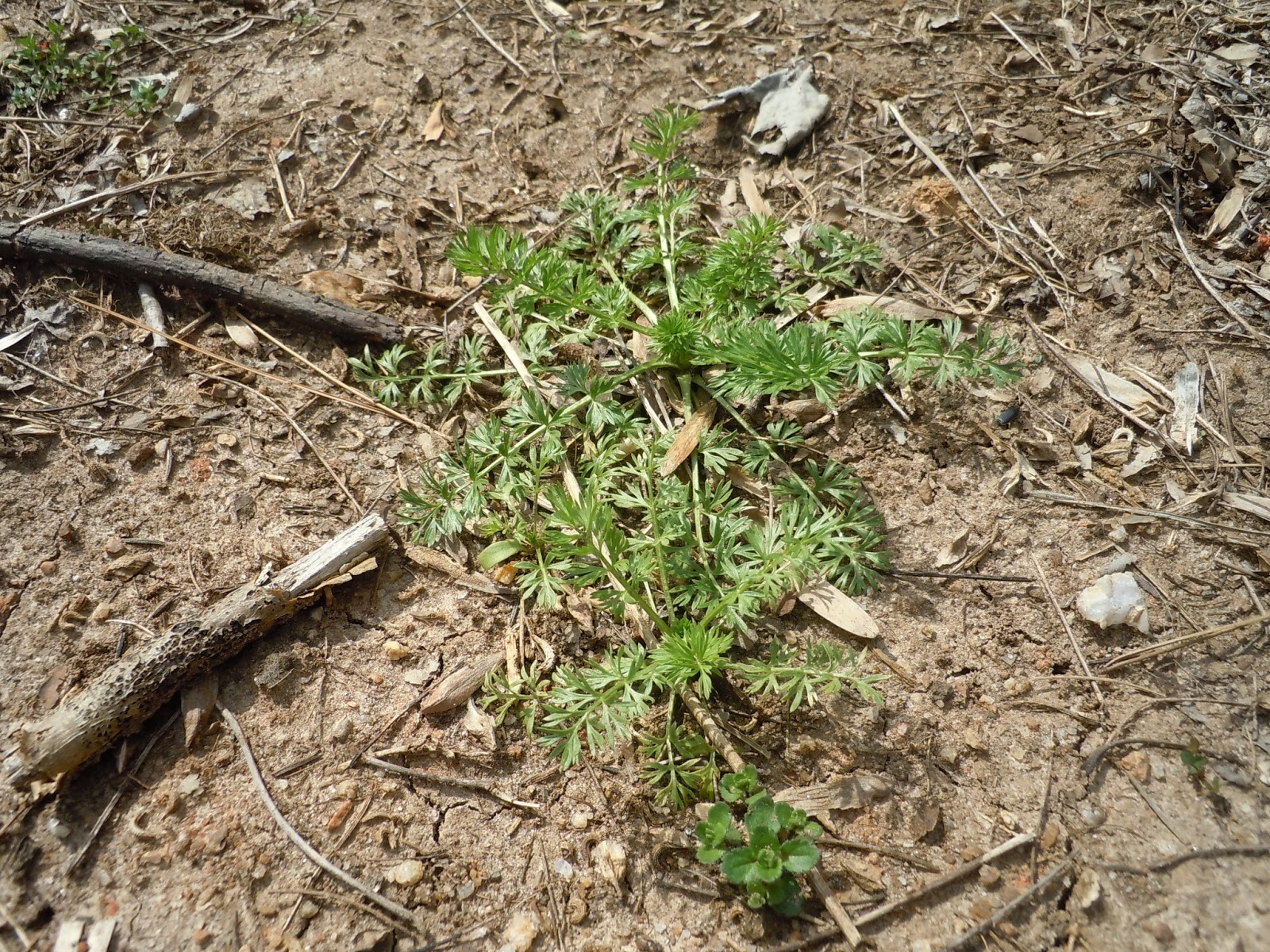
Before starting to turn the soil for this year's garden, I had to have a look around to see what had come back from last year. So far, there aren't that many volunteers, but I did find a few things that I want to keep around:


Bachelor's Buttons

Borage

Calendula

Mystery greens

Nigella

    
Romaine Lettuce


20130225

Seeds Ordered!


I just ordered my seeds for my garden this year.  From Seeds of Change I got Black Beauty eggplant, a purple strain of tomatillo, Purira pepper (an early-producing variety that's supposed to be very spicy) and some Yukon Gold seed potatoes.  From Horizon Herbs I went with the Chadwick Cherry tomato, more Mboga peppers, Fisher's Earliest corn, epazote, Revolution spinach and three spinach substitutes (Red Orach, Red Aztec and Dark Green Spinach amaranth).

I've never grown potatoes, tomatillos, purira peppers, epazote or any of the spinach substitutes.  Eggplant I've only grown from store-bought seedlings.  The revolution spinach was the winner of my spinach testing last year (the only one that did at all well).

There are a lot of other things I'm planning on growing this year, from seeds that I've saved myself, including okra, sunflower, amaranth, bok choy, zucchini, winter squash, peas and maybe some beans.  If 2012 could be known as the year my garden died (I lost my sage and thyme, and I'm worried that the lavender and peppermint aren't growing yet this year), 2013 will be known as my most productive year yet!  The toddler's big enough to play by himself in the yard while I work in the garden (bonus: he loves to be outside!).  With the way that grocery prices have gone, I'm more motivated than ever to grow my family's food.


20120930

The Neglected Garden


After a year of mostly neglecting my garden, I finally got back out there about a week ago.  I have a new system that seems to be working fairly well.  I had been cooking and eating my lunch after feeding the toddler and putting him down for his nap.  Now, I'm working really hard to have something prepared for myself so that I can eat with him.  Then, after I put him down, I spend one hour outside in the garden.  It means I have to do a little more of the housework while he's awake, but he's really entertaining himself much better.  In the past, I've been overwhelmed with large projects and ended up not even starting them.  Now, after an hour, I usually want to keep working, but instead I come back inside and do some chores in here where I can hear him when he wakes up.  This leaves me wanting to get back out there the next day.

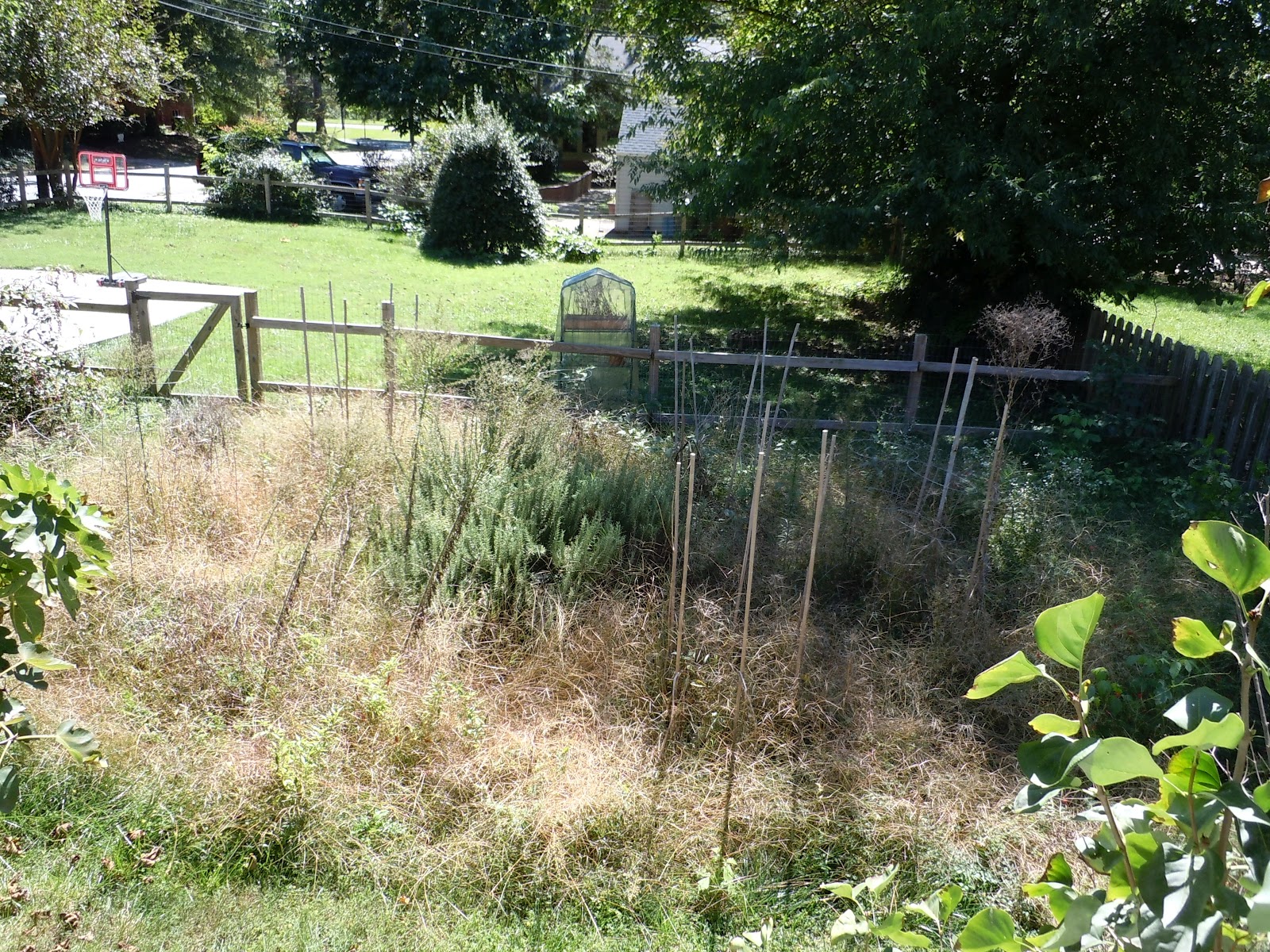
Mostly, I've just been weeding.  Here's the side garden after I got it a little cleaned up:


 The mboga peppers not only survived being buried in grass, but have really started producing now that the weather's getting a little cooler.  I'm drying the red ones to grind up later, and I've been eating the green ones with my bean burritos (very nice).


The pineapple sage has also started to bloom.  It's definitely worth the wait.


The only other survivors were the basil, the chia volunteers and some bok choy.  Well, plenty of lambsquarters had gone to seed, so I spread those seeds and some bok choy and arugula seeds and all of that is starting to sprout.

The back garden is still in rough shape, but I've spent a few hours out there since this picture was taken and it's looking a little better.


20120815

A day to work


So, I haven't really blogged about my garden in a long time.  I'd like to say that I've been too busy gardening, but that's just not the case.  In fact, I've all but abandoned the garden.  Fortunately, it hasn't abandoned me.

Here's a picture of the first ripe tomato we got back in late June:


This was one of the new Chadwick Cherries I grew this year.  I was very impressed.  They were tasty and very large for cherries.  Unfortunately, we didn't get more than a few after that one.  We've been having some trouble with squirrels taking our tomatoes and I've had to pick them before they were ripe.  This year, they started taking them while they were still green.  I'm going to have to figure something out next year.  Maybe I'll offer an alternative food source or maybe I'll just shoot them.  After the figs started to ripen earlier this month, the squirrels lost their interest in the green tomatoes and I was able to pick some and fry them:


We also made a super tasty frittata with garden greens:


Besides the greens and the figs, we've gotten little else out of the garden this year: only one zucchini before the heat wave, one acorn squash volunteer, two little eggplants that went into some ratatouille and some chili peppers:


These are all cayenne, which have produced fairly well in spite of staying tiny.  The mboga peppers are also starting to ripen and the plants themselves are very nice-looking.  I did a taste test to compare the cayenne and the mboga (which look very similar) to see if I want to grow both next year.  They were about the same level of spicy and had a very similar taste.  The mboga seemed to hit my stomach a lot harder, but it may have been because it was the second one I ate.  I really do like the plant, though, but the cayenne has produced better.  I think I will keep them both.  

I didn't get a single jalapeno out of the garden this year.  They were too small when the heat hit.  I never even got the Piri Piri in the ground.  They have such a long season and I was too late starting.  We've been blessed by generous gardeners this year, though.  That ratatouille I mentioned had tomatoes from a friend's garden.  Another friend has given us lots of okra and bunch of jalapenos:


This is probably my most disappointing season in the ten years I've been gardening.  The garden has slipped to be maybe my seventh priority after caring for my toddler, keeping up with housework, buying and preparing food, my job, training for my first marathon and keeping the yard looking almost presentable.  

My wife has taken this week off from work to spend time with some visiting family and that has given me a chance to get some stuff done.  On Monday, we spent the morning with my parents and I spent the afternoon catching up on some social networking sites I'd been avoiding because of potential Olympics spoilers.  Yesterday, I ran 8 miles in the morning and then had to drive to the next town over to mow the yard at our rental property, since we're between tenants.  Today, my wife took our son and her visiting relatives to see her aunt that lives nearby and that gave me a chance to spend some time cleaning up the yard.  Tomorrow, I'm planning to run 13 miles in the morning and then see what I can do in the garden.  Friday, I'll have to rest and (hopefully) sleep since I'm working that night.

I didn't get everything done that I wanted, but I did get to work on a part of the yard that has been bugging me for a while.  It actually got so bad that one of my neighbors came over and did a little cutting on it the other day.  She didn't cut much, but she did make me realize that I had to get it done:


Full disclosure: the red car wasn't there in the before picture.

In addition to mowing, I also got to cut the ivy off of the front porch:


I'll be satisfied if I can only get the weeds a little under control in the garden tomorrow, but if the work goes fast, I might even get some cool-weather crops planted.  I'm thinking spinach and maybe bok choy or winter squash!


20120601

All about Apiaceae

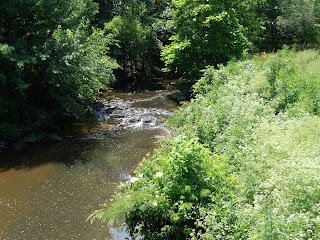
Wild apiaceae on the banks of North Buffalo Creek


For me, an interest in gardening is turning into an interest in botany.  I've become fascinated by the way that different plants are related to each other and what that means in terms of their growing together.  This interest has led me to a desire to write a series of posts about the major families that I plant in my garden.
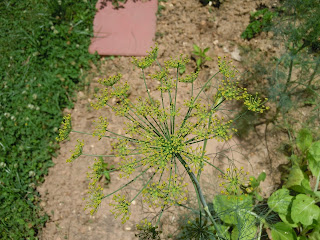
Dill flower


An important part of organic gardening is companion planting or poly-culture.  Certain plants have been shown to help each other when grown in close proximity.  Other plants can be grown successfully together because they do not compete for resources (for instance, if their roots extract nutrients at different levels).  Still other plants have a more generalized beneficial effect, either by repelling different types of pests or by attracting beneficial insects.
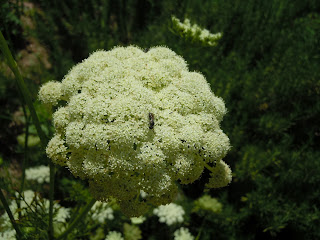
Carrot flower


It's for this last reason that every garden should have at least one member of the apiaceae (or umbelliferae) family.  The shape of their flowers is perfect for attracting ladybugs, parasitic wasps and predatory flies into your garden.  All of these insects will then feed on various insect pests in between snacking on your flowers.  Many members of this family are very pungent herbs and, when used in a poly-culture setting, can confuse pests that are looking for your other plants.  The reason that I've picked this family to start with is that several are flowering in my garden right now.  I've also noticed what I would bet is a wild relative growing on the banks of a creek near my house.


 My wife says that this is Queen Anne's Lace.  A quick internet search confirmed that as a possibility.  Some other options would be wild carrot, cow parsley, fool's parsley and poison hemlock.  You can tell by the foliage that it is very similar to the carrot. 


You can also see that it does its job of insect attraction.
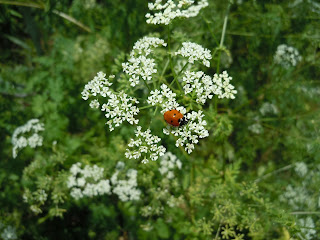


Probably the member of this family that is most commonly cultivated in home vegetable gardens is the carrot.  Carrots are an excellent source of beta-carotene, fiber and antioxidants.  The tops are supposedly edible (and nutritious) but they can be quite bitter and might even be toxic in large enough quantities.  In heavier soils, with a higher clay content, the best carrots to use are the shorter, wider varieties instead of the long thin types.  Right now I have several of the "scarlet keeper" variety that I've left all winter in an attempt to save some seed.  Like some other members of this family, carrots are biennial and will only go to flower in the second year.  Mine are now flowering to almost four feet tall and are very pretty.  I'm not sure how obvious the seeds will be when they develop and if they will be easy to collect or not.  I do think that they will probably reseed to a certain extent.  Carrots can be grown surprisingly close together, but do need to be thinned to a few inches between them in order to develop properly.
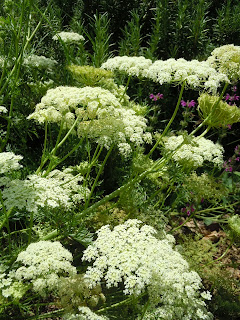
Carrot with rosemary and salvia


Another member of this family that is grown as a vegetable is the parsnip.  I have not tried to grow parsnips yet, but hope to try them in the future.  According to Grow Biointensive, parsnips produce the most calories per square foot of garden space, so they are a must for anyone making a serious attempt to grow all of their own food.  They achieve this by being both very dense in calories compared to other vegetables and by the fact that they can be grown very close together, like their cousins the carrots.  Their tops, however, are toxic and should only be handled with gloves.  The other vegetable member of the apiaceae family is the Hamburg root parsley, a type of parsley that is grown in Europe and used in stews.  I probably will not be trying this one, since I would be worried that it would cross-pollinate with my parsley.
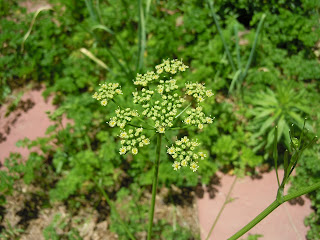
Parsley flower


Most of the rest of the apiaceae that are cultivated are used as herbs or spices.  Parsley may be the most common of these and is the most abundant in my garden right now.  Like carrots, parsley is biennial and it reseeds readily in the second year.  Our winters have not been heavy recently, but the parsley has survived well.  Most of the top will die off, but it comes back strong and early in the spring.  Even when I have thought it to be dead, when I pulled it up, the roots were extensive and healthy so I left some in the ground and they've done very well.  This year, parsley may win the re-seeder of the year award (although the lambsquarters are coming on strong) and I have over 40 plants that have come up as volunteers this spring.  Parsley is extremely nutritious.  It is a good source of protein and an excellent source of fiber and a lot of different vitamins and minerals.  Just one cup gives you all the vitamins A, C and K that you need and about a quarter of your iron and folate.  It is the main ingredient in tabouleh, which is my favorite salad, an essential part of falafel, kofta and other meat balls and a big part of my meat loaf!
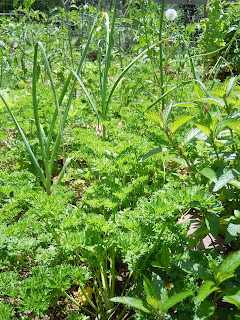
Parsley with garlic and mint


The other herb members of the family apiaceae that I have experience growing are dill and coriander.  Dill leaves are excellent with fish and vegetables and, after it flowers, the seeds can be used as a spice for cooking and for pickling.  The leaves of the coriander plant are called cilantro and are used extensively in Mexican and Asian cooking.  Chopped up with onions and tomatoes it is good eaten with either nacho chips or chapati.  I've never gotten a lot of chance to harvest the greens as it bolts to seed very quickly.  The seeds, called coriander, are an excellent spice that is used heavily in Indian food.  Both dill and coriander reseed very well, but have not done as well for me as parsley.  Compared to the 40 parsley volunteers, I think I got 6 or 7 dills and only one coriander.
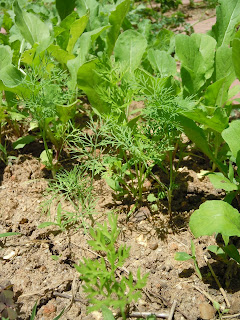
Herb seedlings


Many other members of the apiaceae family are used as herbs and spices, including fennel, cumin, chervil, angelica, asafoetida, cicely, anise and lovage.  Celery is also a member of this family.  My wife has been encouraging me to grow fennel, but I have read that it can impair the growth of other plants in the garden.  Maybe I can find some out of the way place to try it.  I'm trying cumin this year, with no luck so far.  There are some sprouts which I believe to be dill or coriander that may yet turn out to be cumin.  I use it probably even more than coriander, since I put it in chilli and other bean dishes as well as in curries.  It's very good in hummus.

So, if you don't have any of the apiaceae family in your garden, you should try some this year!  Pick a nutritious veggie, a delicious herb or just plant one for the insect attracting benefits.